Recipes – Page 13 – MedshieldMOM

Surprising Health Benefits of Beans + A Tasty Recipe!

High in fibre and a great source of plant protein, beans are good for the body and should form a part of our weekly diet. They can be super tasty too – and we have a great recipe for you to try!

Diets higher in fibre and protein support weight loss as both fibre and protein help you feel satiated – fuller for longer! Because beans are a plant-based source of protein, they don’t have saturated fats that are found in animal protein and are thus better for your heart health too. Here are 5 surprising health benefits of beans:

  1. Not all protein is equal. While all beans contain protein, only soybeans contain all nine essential amino acids. This is why you’ll find soya in many plant-based foods. The trick here is to mix up the types of beans you eat with other sources of protein to ensure that you’re getting all the required nutrients. One cup of tinned black beans provides 14.5g of protein, 16.6g of fibre and 4.56mg of iron.
  2. Beans are great for pregnant women. Beans contain high volumes of folate. Folate is one of the B-vitamins and is needed to make red and white blood cells in bone marrow, convert carbohydrates into energy, and produce DNA and RNA. It is essential for the healthy growth of a foetus,
    Low folate has also been linked to an increased risk of depression and poor response to antidepressant treatment, so up that intake.
    One cup of shelled edamame beans provides 482mcg of folate. Add edamame to salads, stir-fries, curries, soups or mash them to make a yummy dip.
  3. Including beans regularly in your diet may reduce your risk of cancer. Beans are rich in polyphenols, which are a type of antioxidant. Antioxidants fight the effects of free radicals, which are damaging chemicals that the body produces during metabolism and other processes. Because of this and the fact that studies show beans to act as anti-inflammatory agents, they could help to reduce the risk of cancer.
  4. Beans help with diabetes (and may even help to prevent it). As mentioned, beans are high in fibre and this can help lower blood glucose levels. Studies show that a high-fibre diet may prevent the onset of Type-2 Diabetes.
  5. Beans can create better gut health. A variety of beans, especially black beans, enhance gut health by improving the intestinal barrier function and increasing the number of beneficial bacteria. Recent research has shown that a healthy gut means a healthy immune system.

Vegan Bean Cassoulet (stew)

Serves 4-6

Ingredients:

  • 1 brown onion, finely chopped
  • 2 large carrots, finely chopped
  • 2 large celery stalks, finely chopped
  • Olive oil
  • 4 cloves garlic, finely chopped
  • 400g brown mushrooms
  • 1 cup dry white wine
  • 3 tins white beans, such as cannellini
  • 1 litre vegetable stock
  • 2-3 tbsp tomato paste
  • 1 bunch fresh thyme
  • 2-3 fresh bay leaves (or 5 dried bay leaves)
  • Salt
  • Freshly ground black pepper

Method:

  1. In a large pot or casserole dish, sauté the onion, carrot and celery in olive oil over medium heat. After 10 minutes, add the garlic and mushrooms. After a further five minutes, add the wine. Keep cooking until the wine has mostly evaporated.
  2. Add two tins of beans and the stock, then stir in the tomato paste.
  3. Wrap the thyme and bay leaves together with a piece of string to make a bouquet garni. Add to the pot. Bring everything to a boil, then lower the heat to a simmer. Mash the third tin of beans and add to the dish to help thicken the stew. Simmer for another 30 minutes. If you’re using a large oven-proof dish, pop the cassoulet in the oven for up to an hour.
  4. Season to taste. Remove the bouquet garni before serving and sprinkle with some extra fresh thyme (optional).

For more info and healthy recipes, visit our Resource Hub on MedshieldMovement.co.za
Go Back

Similar Articles

Mexican-Style Tomato and White Bean Soup

Read More

 Roast vegetable and quinoa salad recipe

Read More

Healthy Christmas Starter, Main and Dessert

Read More

Crispy Chickpea & Veggie Patties (Air Fryer Friendly)

Read More

Healthy Side Dishes for Your Christmas Lunch

Read More

Sip Smart: A Healthy Cucumber Mint Mocktail

Read More

The Health Benefits Of Hemp Seeds – And A Great Recipe!

Read More

What to Eat for a Happier Mindset

Read More

The Best Breakfast Flapjacks With A Twist!

These flapjacks solve two problems: “What’s for breakfast?” and “What can I do with these leftover veggies?” They’re filling, healthy and will fuel you throughout the day.

“This recipe is a variation of one of the first-ever recipes of mine that got published in Women’s Health South Africa,” says Amy Hopkins, cookbook author and owner of Amy Hopkins Media and Medshield Movement ambassador. “I’m one of those people who needs to eat a good breakfast. I prefer to exercise in the early morning and then need a proper meal to fuel me through the rest of the day. While this recipe is typically something I’d make on the weekend, it can be made any day of the week if you have enough time or are still working from home,” she says.

“I love the texture and flavour that the butternut adds to these flapjacks. Plus, it’s a great way to use up leftover roast vegetables, which is often what we’re left with over the festive season,” she says. “If you don’t have leftover vegetables, you can use banana instead of butternut and try to make a slightly sweeter version of this breakfast by adding berries, coconut cream, shaved and toasted nuts,” she advises. “If you have time, start making the batter the night before, so that the oats have time to soak up all the flavours.”

This recipe is packed with healthy protein, fibre, healthy fats and nutrients.

What You Need

For the Flapjacks:

Ingredients

  • 2 cups rolled oats
  • 1 tsp ground nutmeg
  • 1 tsp ground cinnamon
  • 1 tsp baking powder
  • ¼ tsp baking soda
  • ½ tsp salt
  • 150g leftover roasted butternut
  • 1¾ cup unsweetened almond milk, divided (or milk of your choice)
  • 4 large free-range eggs
  • Olive oil, for frying

For the Toppings:

Ingredients:

  • 80g smoked salmon
  • 1 avocado, sliced
  • Vegan soft cheese or goat’s milk cheese, for crumbling over
  • 50g pumpkin seeds (or sunflower seeds), chopped
  • A squeeze of fresh lemon juice

Method

  1. Place oats, nutmeg, cinnamon, baking powder, baking soda and salt into a food processor and blitz to combine.
  2. Mash the butternut in a bowl, then, using a hand blender, blend ¾ cup almond milk with the butternut to form a purée. Add to oat mixture.
  3. Crack the eggs into the oat mixture and mix again until well combined. Place the batter into a bowl, cover with cling wrap and place in the fridge for at least one hour to settle and thicken.
  4. Mix in the additional almond milk to loosen the mixture (you might not need to use a whole cup).
  5. Heat a non-stick frying pan and drizzle in a little oil, if necessary. Cook the flapjacks, in batches, until golden. Set aside in the oven to keep warm. Don’t pile on top of one another as they may stick. You should get 12 thick flapjacks out of the mixture (about 10 to 15cm in diameter).
  6. Add toppings and enjoy!
Go Back

Similar Articles

One Tray Dinner: Lemony Chicken And Potatoes With Olives & Feta

Read More

Warm Up This Winter with a Creamy Roasted Butternut Soup

Read More

Healthy Vegan Leek & Potato Soup Recipe

Read More

Post-Workout Vegan Blueberry Smoothie

Read More

 How to Make Rainbow Salad in Jars!

Read More

Nutrient-Packed Green Soup

Read More

Healthy Summer Roast Chickpea Salad Recipe

Read More

How To Make The Best Smoothie Bowls – And This Filling Recipe

Read More

Crunchy Cabbage Salad That’s Delicious And Filling!

Summer means more salads on the menu and we’re here to show you how to make your salads work even harder for you, by packing them with ingredients that are both nourishing and filling!

How to make a salad that will satisfy and keep you filled? Focus on fibre and protein and delicious textures and flavours! You want a combination of crunch and soft and chewy and fresh as well as a variety of nutrients.

This salad goes a long way – thanks to the cabbage – and is great to eat as a meal on its own or to serve as a festive side dish. Cabbage is often overlooked as a salad ingredient, even though it brings plenty of amazing nutrients to the table!

  1. Cabbage is rich in Vitamin A, vitamin B6, vitamin C iron and folate.
  2. Cruciferous vegetables like cabbage contain many different antioxidants that have been shown to reduce chronic inflammation.
  3. This crunchy vegetable is full of gut-friendly insoluble fibre, which helps to keep the digestive system healthy by adding bulk to stools and promoting regular bowel movements.
  4. Red cabbage is an excellent source of potassium as well as powerful compounds called anthocyanins, which belong to the flavonoid family, which studies have found may help to reduce your risk of heart disease.
  5. Cabbage contains substances called phytosterols, which are plant compounds that reduce LDL cholesterol by blocking the absorption of cholesterol in the digestive tract.

Crunchy Cabbage Salad Recipe

What You Need:

Ingredients:

  • ½ small purple cabbage, thinly sliced
  • ¼ white cabbage, thinly sliced
  • 1 head cauliflower, chopped
  • ½ cup toasted mixed seeds (such as pumpkin, sunflower, sesame)
  • ½ cup toasted chopped nuts (such as Brazil, macadamia, almonds)
  • 5 spring onions, finely sliced (or ¼ small red onion very finely chopped)
  • Handful coriander leaves
  • ½ cup fresh pomegranate arils (or dried cranberries, finely chopped)
  • 1 large or 2 small avocados

For the Secret Sauce (Dressing):

  • 2 tsp honey (or agave if vegan)
  • 1 tsp mustard
  • Juice of one lime
  • 1 tbsp olive oil
  • 1 tsp chilli flakes or ½ chilli, very finely chopped
  • 2 tbsp low-sodium soy sauce (or tamari for gluten-free)
  • Salt
  • Freshly ground black pepper

Method:

  1. Whisk the dressing ingredients together and set aside.
  2. Toss the salad ingredients together, pour over the dressing and serve. Easy-peasy!

Note: If you want to up the protein, add 1 cup sliced chicken breast pieces or 1 cup edamame beans for vegans.

This recipe first appeared in our #MedshieldMovement ambassador Amy Hopkins’ standalone bookazine called “Inside the WH Kitchen” while she worked as the managing editor at Women’s Health South Africa.

Go Back

Similar Articles

How to make vegan “chicken” mayo sarmie with chickpeas

Read More

Warm Up This Winter with a Creamy Roasted Butternut Soup

Read More

Date-Night 3-Course Recipes That Are Delicious & Healthy

Read More

Spring Greens Phyllo Pastry Tartlets

Read More

How To Make Fattoush – A Hearty Winter Salad

Read More

January Reset: A Fresh & Healthy Smoothie to Kick-Start Your Year

Read More

Tasty, Healthy and Easy Chickpea Curry Recipe

Read More

Valentine’s Month Heart Healthy Seed & Nut Bread Recipe

Read More

Ditch the Mayonnaise – This Healthy Sauce Is Way Better!

You might think you’re eating pretty healthily most of the time, but research shows that we’re taking in more salts, fats and sugars than we think. And they come in the form of condiments.

Store-bought sauces, dressings and condiments are layered with extra salts, sugars and fats – and that’s what makes them so addictive.

If you’re trying to live a healthier lifestyle, eat healthier foods or watch your calorie intake, we have a recipe for a fresh, nutrient-packed drizzle that works with basically everything! It can be served with steak, on fish or chicken, over potato wedges and even over a dish of roasted vegetables.

The trick is to use fresh herbs and lemon for flavour, as well as good quality olive oil for healthy fats. You can also adjust this recipe to suit your taste e.g. leave out the chilli if you’re not a fan of spice or swop coriander for more basil and add fresh mint! You can also keep this sauce in a sealed glass container in the fridge for three to four days.

Chimichurri-style sauce

  • ½ shallot (or ¼ small red onion), chopped
  • 1 jalapeño (or small red chilli), chopped (optional)
  • 2 cloves garlic, chopped
  • ¼ cup red wine vinegar
  • 2 handfuls coriander
  • 1 handful flat-leaf parsley
  • 1 handful basil
  • ½ cup extra-virgin olive oil
  • Black pepper
  • Pinch of salt (optional)

To make the Chimichurri-style sauce, combine all the ingredients in a food processor and pulse a few times. You don’t want it overly processed. Alternatively, finely chop all the ingredients and whisk them in a bowl for a chunkier texture. Remember to taste to adjust flavour and seasoning.

Visit our resource hub for all the latest recipes!

Go Back

Similar Articles

Fresh, Light & Nourishing: Prawn, Watermelon & Blueberry Summer Salad

Read More

5 Amazing Things You Can Do With Beetroot

Read More

Tasty, Healthy and Easy Chickpea Curry Recipe

Read More

Why Chickpeas Are So Good For You + Roast Chickpea Recipe

Read More

Avocado Chocolate Mousse

Read More

Healthy and Easy Lentil Bobotie

Read More

Surprising Health Benefits of Beans + A Tasty Recipe!

Read More

Veggie Cottage Pie With Orange Sweet Potato Mash

Read More

Easy Ways to Eat More Vegetables Plus Tasty Veggie Recipes

We know that we should be getting our five-a-day of fresh fruit and vegetables, but it’s not always that easy… or is it? We show you that it’s easier than you think! With these fun tips and delicious vegetable recipes, you’ll be getting your green in, in no time!

Freshly sliced carrots, sugar snap peas, red pepper slices, celery and even baby corn are ideal veggie snacks that are especially delicious with a serving of hummus.

If you find it hard to eat all these veggies individually, try wrapping them up with other salad ingredients in rice paper rolls. Vietnamese-style fresh spring rolls are gluten-free and delicious served with a simple dipping sauce. You simply must try our recipe.

Rice Paper Rolls

What You Need:

  • 3 small red cabbage leaves, shredded
  • 2 courgettes
  • 1/4 red pepper
  • 1/4 yellow pepper
  • 2 baby carrots
  • 3 spring onions
  • 1/2 avocado
  • 3 sheets rice paper

Method:

  1. Slice the vegetables and avocado into long thin strips.
  2. Pour room temperature water into a large bowl. Soak one sheet of rice paper at a time for five seconds in the water. Remove and place on a kitchen towel to soften for 10 seconds.
  3. Divide the rest of the ingredients among the three rice-paper sheets and fold to make three large spring rolls.

Serve with a dipping sauce of your choice or combine: Juice of 1 lime, 3 tbsp rice wine vinegar, 2 tbsp tamari or soya sauce and a pinch of chilli flakes in a bowl, then serve.

Want to get your vegetables in first thing in the morning? Here are 10 vegetables that work deliciously in smoothies! Or try packing your egg-based dishes, like a frittata with extra veggies. Try this recipe below:

Veggie-Packed Frittata

What You Need:

  • Olive or canola oil
  • 2 leeks, sliced (or 1 small onion)
  • 2 cups sliced mushrooms
  • 1 clove garlic, finely chopped (optional)
  • 1 cup grated courgette (excess water drained)
  • 10 eggs
  • 1/2 cup unsweetened soy milk (or milk of your choice)
  • Salt and freshly ground black pepper
  • 2 cups baby spinach
  • Pinch chilli flakes
  • Basil leaves, for garnishing
  1. Preheat the oven to 180°C.
  2. Heat a little oil in a large, oven-proof skillet. Only once the oil is hot, add the sliced leek and mushrooms. Sauté for five minutes, then add the garlic (if using).
  3. After three to five minutes, add the courgette to the pan and sauté for a further three minutes.
  4. Whisk the eggs and milk together with a pinch each of salt and pepper. Add the fresh spinach to the veggies and stir to combine. Pour the egg mixture over the vegetables, gently moving the skillet so that it covers all of the veggies. Sprinkle with peppadew and place the skillet into the oven for 15 to 20 minutes, until the egg is cooked through.
  5. Serve the frittata garnished with some fresh basil leaves or a leafy green salad.

If you think crudites are boring, try vegetable tempura as a snack. It’s a great way to use up bits of leftover veggies in the fridge. We recommend trying it with broccoli florets, courgettes or aubergine slices. Try this gluten-free vegetable tempura recipe below:

Vegetable Tempura Recipe

What You Need:

  • 500ml heart-healthy canola oil
  • 1 cup brown rice flour
  • 1/2 tsp bicarbonate of soda
  • Pinch tsp salt
  • 5 – 2 cups sparkling water
  • Sliced vegetables, such as courgettes, cauliflower and broccoli

Method:

  1. Heat the oil in a pot over medium-high heat.
  2. Whisk together the flour, bicarbonate of soda, salt and water.
  3. Dip the vegetables into the batter and shallow fry in batches. Once golden brown, place on a paper towel to drain excess oil.

Serve with the same dipping sauce as above.

Go Back

Similar Articles

Post-Workout Vegan Blueberry Smoothie

Read More

Healthy Winter Comfort Food: Pad Thai

Read More

Easy Tomato, Chickpea and Aubergine Stew Recipe

Read More

Warm Up This Winter with a Creamy Roasted Butternut Soup

Read More

Grilled Vegetable & Halloumi Skewers For The Braai

Read More

The Health Benefits Of Hemp Seeds – And A Great Recipe!

Read More

How To Make A Healthy Salad Nicoise

Read More

Spicy Prawn Tacos For Hot Summer Nights!

Read More

Homemade Gluten-Free, Sugar-Free Granola Recipe Plus Fun Ways To Eat It

This gluten-free granola recipe is so easy to make, contains no grains of any kind of sugar. We do, however, add some chopped dates for a little natural sweetness (you can leave this out if you’d like).

You choose any type of nuts that you may have, such as macadamia, cashews, brazil nuts – just remember to roughly chop them. Once your granola has cooked, you can add extras like goji berries, sesame seeds or dried fruit of your choosing. This recipe is Paleo-diet friendly and Keto-diet friendly, sans the dates.

What You Need:

  • 1/3 cup desiccated coconut
  • 2/3 cup coconut flakes
  • 1/2 cup pecans nuts, chopped
  • 1/2 cup walnuts, chopped
  • 1/3 cup almonds, chopped
  • 1/3 cup pumpkin seeds
  • 10 Medjool dates, chopped
  • 1/4 cup coconut oil, melted
  • Pinch ground cinnamon
  • Pinch ground nutmeg

Method:

  1. Preheat the oven to 180°C.
  2. Mix all the ingredients in a large bowl, making sure that the coconut oil coats everything evenly.
  3. Spread the granola onto a baking tray lined with wax paper and bake for 15 minutes, or until golden brown. Cool, then pop the mixture into a large sealable container.

3 Ways To Eat Your Granola (that does not include adding milk)

  1. Mash one banana, mix in one tablespoon of nut butter and heat for 30 seconds to “melt” slightly until it has a similar consistency to yoghurt. Mix in granola and enjoy. This is a great dairy-free, vegan alternative.
  2. Portion your granola into little zip-lock bags and use it as a trail mix for hikes or snacks.
  3. Top your smoothie bowls with granola for extra crunch and nutrients.

For more amazing recipes, visit our Medshield Movement Resource Hub here.

Go Back

Similar Articles

Healthy Festive Season Baked Fish & Fennel Dish

Read More

Fluffy Gluten-Free Flapjacks For The Holidays

Read More

Vegan roast butternut stuffed with quinoa, cranberries, pecans and spinach

Read More

How to make vegan “chicken” mayo sarmie with chickpeas

Read More

Roast Beetroot Salad with Whipped Tofu, Nuts and Mint

Read More

Surprising Health Benefits of Beans + A Tasty Recipe!

Read More

Why Do We Need Iodine In Our Diet? Plus This Iodine-Rich Recipe!

Read More

Butternut Soup With a Twist

Read More

The Best Ratatouille Recipe and 5 Ways to Eat It

Why is ratatouille so great? It’s affordable to make, feeds a crowd and is delicious on its own or as a side dish.

Ratatouille is a French Provençal stewed vegetable dish that classically contains tomato, garlic, onion, courgette, aubergine, green, red or yellow pepper and some combination of leafy green herbs. Ratatouille is a fantastic way to use vegetables left behind in your fridge and a delicious way to serve up an extra helping of nutrients, vitamins and minerals at every meal!


Ratatouille Recipe

This Ratatouille will be thick and delicious with every bite.

What You Need:

  • 2 brown onions
  • 4-5 cloves garlic
  • 4-6 courgettes
  • 2 aubergines
  • 3 red peppers
  • Olive oil
  • Salt and freshly ground black pepper
  • Fresh rosemary, leaves removed from stems
  • Fresh thyme, leaves removed from stems
  • 2 x 400g tins chopped, peeled tomatoes
  • 2 Tbsp balsamic vinegar
  • Fresh basil, for serving
  • Lemon zest, for serving (optional)

Method:

  1. Preheat the oven to 200°C.
  2. Place baking paper on two large oven trays, then prepare the vegetables. Cut the onions into thick slices and smash the garlic cloves (skin on). Thereafter, slice the courgettes into one-centimetre rounds and the aubergines into two-centimetre cubes. Slice each of the peppers into eight strips, then spread the veggies on the baking trays, making sure they form an even layer.
  3. Drizzle olive oil over the vegetables and sprinkle with salt, pepper and herbs. Place in the oven for 45 min – 1 hour. Some of the vegetables cook faster than others – 35 minutes for the peppers, about 1 hour for the onions. Stir the vegetables every 15 minutes.
  4. Once cooked, place all the vegetables into a casserole dish, removing the garlic skins. Add the tins of tomatoes and the balsamic vinegar and stir to combine. Reduce the oven to 180°C. Place the casserole dish into the oven for 40 min – 1 hour, until everything has reduced and the sauce is beautiful and thick.
  5. Serve with fresh basil leaves and a sprinkle of lemon zest, if desired.

5 Ways To Eat Ratatouille

  1. Serve it hot in a bowl with a crispy piece of French bread to mop up the gravy. Alternatively, toast the same French bread and spoon the Ratatouille on top as a fancy toast topping.
  2. Serve it alongside roast chicken or fish. The vegetables lend themselves well to white meat.
  3. Make a warm winter lentil salad, by combining the ratatouille with heated cooked lentils (for protein), garnished with olives and extra fresh basil.
  4. Turn the ratatouille into the base for a shakshuka. Heat it gently in a pan, make 4 wells and crack some eggs inside. It’s the perfect cosy brunch for a cold winter’s morning.
  5. Add it to soups for extra flavour and texture. If you have a vegetable or tomato soup that needs a little richness, add in scoops of ratatouille to make it heartier.

For more delicious recipes, check out our recipe hub!

Stock Image credit: Food photo created by azerbaijan_stockers – www.freepik.com

Go Back

Similar Articles

Energising Matcha Smoothie

Read More

Spring Greens Salad Recipe

Read More

Grilled Vegetable & Halloumi Skewers For The Braai

Read More

How To Make A Veggie-Packed Vegan Lasagne

Read More

Big Mac Tacos (The Viral Soft Shell Version – With a Healthier Twist)

Read More

How to fuel your work day

Read More

VEGANUARY RECIPE: Tasty Pulled Oyster Mushroom Tacos

Read More

Healthy and Easy Lentil Bobotie

Read More

Home Remedies that Help Ease Cold, Flu & Covid-19 Symptoms

Feeling under the weather? Try these easy-to-make tonics, shots, hacks and nibbles that can help to boost your immune system and alleviate some typical cold and flu symptoms, as well as those associated with COVID-19.

There are some basic hacks to help overcome viruses like the flu which includes lots of rest, staying warm, inhaling steam, drinking plenty of fluids like water and herbal teas and enjoying a hearty chicken soup. Below, we offer some fantastic recipes for homemade tonics and treatments that can help soothe a sore throat, boost your immune system and ease a cough. Please note that these are not meant to replace medicines prescribed by a doctor, but work excellently as add-ons to your prescribed medical treatment.

All-star Ingredients:

Honey is one of the best remedies for a sore throat due to its natural antibacterial properties. It immediately offers relief for pain while simultaneously working to reduce inflammation. Honey can also kill bacteria and help fight off viral infections.

Lemons are great for sore throats because they can help break up mucus and provide pain relief. Lemons also have a high Vitamin C content, which can help to boost the immune system.

Fresh ginger has antiviral effects on respiratory viruses in human cells. Studies have indicated that fresh ginger is an effective tool in protecting the respiratory system.

Salt is a well-known antibacterial and when diluted with warm water, makes for a great gargling agent to reduce swelling and keep your throat “clean”. Try to gargle every 3 hours if possible and avoid swallowing any of the mixture.

Herbal teas like rooibos contain a huge dose of antioxidants and because it’s caffeine-free, it won’t dehydrate your body or give you headaches or heart palpitations. Other teas like peppermint (menthol helps thin mucus and calm sore throats and coughs) and chamomile have anti-inflammatory properties that can ease a sore, inflamed throat.

Elixirs and Mixes

  1. Basic Cough Syrup:
    Place 125ml raw honey into a small pot with 3 Tbsp extra virgin olive oil and the juice of 2 lemons. Gently heat and stir to combine. Allow to cool and then place in a sealed jar in the fridge for a week. Reheat a little at a time and swallow warm.
  2. Spicy Cough Syrup:
    Combine 2 Tbsp each of apple cider vinegar, freshly-squeezed lemon juice, honey and hot water in a jar. Add ¼ tsp cayenne pepper and 1 tsp fresh ginger juice (squeeze grated ginger to get the juice). Shake well each time before using (this mixture will be watery). Place in a sealed jar in the fridge for a week.
  3. Throat Soothers
    Make a saltwater solution with a half-teaspoon of salt in a full glass of warm water. Gargle every three hours as needed.
  4. Super Tea
    In a teapot, place 2 bags of rooibos tea, 3 slices of lemon, 1 Tbsp of sliced/chopped fresh ginger, 1 Tbsp of honey and 500ml of boiling water. Allow to steep for 5-7 minutes before pouring and drinking.
  5. Ginger Nibble
    Fresh ginger can be overpowering and burn when eaten raw, but is very good for you. Slice fresh ginger into little 5mm cubes. Place a drop of honey on top and snack on it.
  6. Super Juice Shot
    In a juicer, place the following ingredients: 1 cup fresh pineapple pieces, 3cm knob of ginger, a pinch of cayenne pepper and a pinch of turmeric powder (or raw, fresh turmeric if possible).

For other ways to keep healthy and boost your immune system this winter, view our other blogs:

Read more: 10 Vegetables That Actually Work In Smoothies

Read more: Tips To Keep Your Immune System Boosted this Winter

Go Back

Similar Articles

Blueberry Apple Crumble: A Comforting, Nutrient-Rich Recipe

Read More

The Best Ways to Cook Brinjals – And Recipe Ideas For How To Use Them!

Read More

Butternut Soup With a Twist

Read More

Spring Greens Phyllo Pastry Tartlets

Read More

How Much Protein Should You Eat Each Day

Read More

Gluten-free, dairy-free banana & almond muffins

Read More

Healthy Summer Roast Chickpea Salad Recipe

Read More

Healthy Winter Comfort Food: Coq Au Vin

Read More

3 Easy Egg Recipes for Dinner that Don’t Include Toast

Eggs are an affordable good-quality source of protein that doesn’t only have to be reserved for brunch or baking. One large free-range egg costs about R4, making it an affordable source of protein compared to meat. In addition, eggs have less saturated fat which means that they are low in cholesterol. It’s a good idea to add an egg to your salad as it helps your body absorb vitamin E from raw, mixed vegetables.

Next time you’re at a loss for what to make for dinner, try these three eggcellent dishes.


Asian Fried Rice

This is a great recipe to make when you have leftover rice. It uses kimchi, which is a spicy Korean fermented cabbage pickle which is a world superfood that is excellent for your gut health! It adds a bang of flavour, but you can totally leave it out if you like.

Serves 2

What You Need:

  • 1 small onion, chopped
  • Olive oil or canola oil
  • 1⁄2 cup roughly chopped kimchi, with juice (optional)
  • 1 Tbsp sesame seeds
  • 2 cups cooked rice
  • 1⁄2 cup shelled, steamed edamame
  • 2-3 tsp soy sauce or tamari
  • 2 tsp sesame oil
    • 2 eggs

For the garnish

  • Sliced nori / dried seaweed (optional)
  • Coriander leaves
  • Chopped green chilli or chilli flakes (optional)

Method:

  1. Sauté the onion in some oil over medium-high heat. After a few minutes, when the onions are starting to colour, add the kimchi (and juice).
  2. In a separate pan, dry toast the sesame seeds over medium-high heat until fragrant and golden. Once cooked, remove the seeds and set them aside.
  3. After the kimchi and onions have cooked for about five minutes, turn the heat down slightly and add the rice and edamame to the pan. Add the soy sauce and sesame oil and stir through to combine.
  4. Meanwhile, heat a little oil in the sesame-seed pan over medium-high heat and fry the eggs (sunny-side up). Once they’re cooked to your liking, remove from the heat.
  5. The rice will have browned slightly by now. Remove from the heat and divide between two bowls. Garnish each bowl with an egg, nori slices, sesame seeds, coriander and chilli.

Mexican Baked Eggs

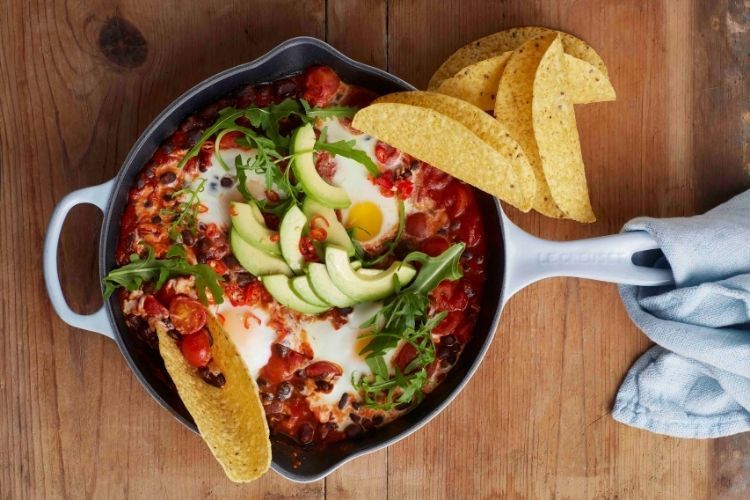
This Mexican-style bean recipe alone is a winner for a vegan dinner! Try it in a wrap, stuffed in a pepper or added to a warm Buddha bowl. Here we give it a little twist by adding some eggs into the bean mix to cook and serve as extra protein. Serve this Mexican goodness in bowls with some tacos or nacho chips for extra crunch. Friday night sorted!

Serves 4

What You Need:

  • Olive oil
  • 1⁄2 tsp smoky paprika
  • 1⁄2 tsp cumin
  • 2 jalapeños, sliced
  • 1 clove garlic, finely chopped
  • 1 tin chopped tomatoes
  • 1 cup fresh cherry tomatoes, halved or quartered
  • 1 tin black beans or red kidney beans
  • 4 eggs

To serve:

  • 1 avocado, sliced
  • 1 red chilli, sliced, or chilli flakes, to taste
  • Fresh rocket leaves (or coriander)
  • 8 corn tacos (optional)

Method:

  1. Preheat the oven to 180 ̊C.
  2. Heat the olive oil in a large oven-proof skillet over medium-high heat.
  3. Once the oil is hot, sauté the spices, jalapeño slices and garlic until fragrant. Add the tinned tomatoes, cherry tomatoes and beans and stir everything together. Allow to cook for 10 to 15 minutes.
  4. Turn the stovetop off. Make four wells in the mixture and crack an egg into each well. Place the skillet into the oven and cook until the eggs are set (and cooked to your liking) for about 10 minutes.
  5. Remove the skillet from the oven and serve with avocado, chilli, herbs and the tacos prepared according to package instructions.

Green “Shakshuka” with Salmon

Instead of the red tomato mixture that normally comes with a shakshuka, this dish uses green vegetables to form the “base” of the pan. You can swop the asparagus for sliced courgettes (baby marrows), depending on what’s in season. Broccoli florets will also work beautifully here. To keep this dish vegetarian, you can let go of the salmon.

Serves 2

What You Need:

  • 2 leeks, chopped
  • 1 clove garlic, very finely chopped
  • Chilli flakes (optional)
  • Extra-virgin olive oil
  • 1 bunch asparagus, chopped
  • 1 cup baby peas, defrosted
  • 2 handfuls baby spinach
  • 4 eggs
  • Salt and pepper
  • 50g smoked trout, torn into pieces (optional)
  • Lemon juice
  1. Sauté the leeks and garlic in olive oil in a large heavy-based pan (add chilli flakes, if using).
  2. Add the asparagus and sauté for one minute. Add the peas and sauté for another minute. Stir in the baby spinach until just wilted.
  3. Make four wells in the vegetable mixture. Crack an egg into each well. Season, then place the lid on the pan and cook for a couple more minutes, until the eggs are cooked through.
  4. Serve immediately with some pieces of trout (optional) and a squeeze of lemon juice.

To learn more about how much protein you should eat in a day, click here.

Go Back

Similar Articles

Gluten-free, dairy-free banana & almond muffins

Read More

7 Healthy Snacks For Your Lunchbox

Read More

Roast Rainbow Carrots with Spicy Orange Hummus

Read More

4 Tasty Hummus Recipes That Don’t Contain Chickpeas!

Read More

Get Your Grains With Millet

Read More

January Reset: A Fresh & Healthy Smoothie to Kick-Start Your Year

Read More

Easy pak choi, pea and rice vermicelli stir-fry

Read More

Veggie Cottage Pie With Orange Sweet Potato Mash

Read More

How to Build a Healthy Buddha Bowl

Not quite a salad and not a plate of veggies, Buddha Bowls are soaring in popularity because of their versatility, clever use of veggies or leftovers and their easy way to include a whole lot of nutrients onto one plate.

A Buddha Bowl is essentially a simple, one-bowl meal, typically vegetarian or vegan. It usually includes an array of colourful veggies, rice, legumes and plant proteins. (Click here for more info on different protein sources and how much you should serve.) Often they are served cold, but some versions are served with a warm base too – or a mix of both!

The most important thing to remember when building any Buddha Bowl is to have a balance of protein, healthy fats, carbohydrates (your macronutrients) and a mix of other nutrients – think about eating the rainbow to get all those good vitamins and minerals.

Another important factor is texture. You want some creamy, some crunchy, some crispy, something light, some “meaty” for the palate. Different colours and shapes make for prettiness and, let’s be honest, we do eat with our eyes! And to tie it all together, some kind of dip is essential!

Building A Buddha Bowl

Here’s an easy way to make the prettiest and tastiest bowls. Choose one or two items from each category and place them together into a bowl in separate little piles.

Your centre dip:

Your heart:

  • Brown/black rice
  • Lentils
  • Beans
  • Grilled mealies
  • Falafel balls

Your fresh fillers:

  • Carrot ribbons
  • Cucumber
  • Tomatoes
  • Shredded cabbage
  • Shredded lettuce
  • Sliced peppers

Your warm fillers:

  • Roasted vegetables such as butternut, sweet potato or pumpkin
  • Grilled mushrooms
  • Sautéed greens like broccoli, spinach, kale

Your crunch:

  • Toasted nuts
  • Toasted seeds
  • Roasted crispy chickpeas
  • Roasted crispy lentils
  • Fruit that “pops” like pomegranate
  • Nachos, rice or seed crackers

Your flavour bang:

  • Jalapeños, chillies
  • Fresh herbs like basil, coriander, parsley
  • Fermented foods like kimchi or sauerkraut
  • Spring onions, red onion, shallots

If you would like to try a Mexican-style Buddha Bowl to start, then your centre will be guacamole; your heart will be black or red kidney beans and grilled mealies; your fresh fillers can be tomatoes and purple cabbage; your warm filler can be mushrooms; your crunch will be nachos; and your flavour bang will be coriander, red onion and Jalapeños. Enjoy!

Make your own and show us your finished Buddha Bowl by tagging @medshieldsa on Instagram and including #MedshieldMovement.

For more recipes, visit our resource hub here!

Go Back

Similar Articles

Raw, Crunchy Spring Green Salad 

Read More

Healthy Chocolate Recipes for Happy, Guilt-Free Enjoyment

Read More

Healthy and Quick Vegan Basil Pesto Pasta

Read More

Easy Ways to Eat More Vegetables Plus Tasty Veggie Recipes

Read More

Fresh, Light & Nourishing: Prawn, Watermelon & Blueberry Summer Salad

Read More

Fluffy Gluten-Free Flapjacks For The Holidays

Read More

Veggie Cottage Pie With Orange Sweet Potato Mash

Read More

It’s Veganuary! Try this easy pasta salad recipe!

Read More